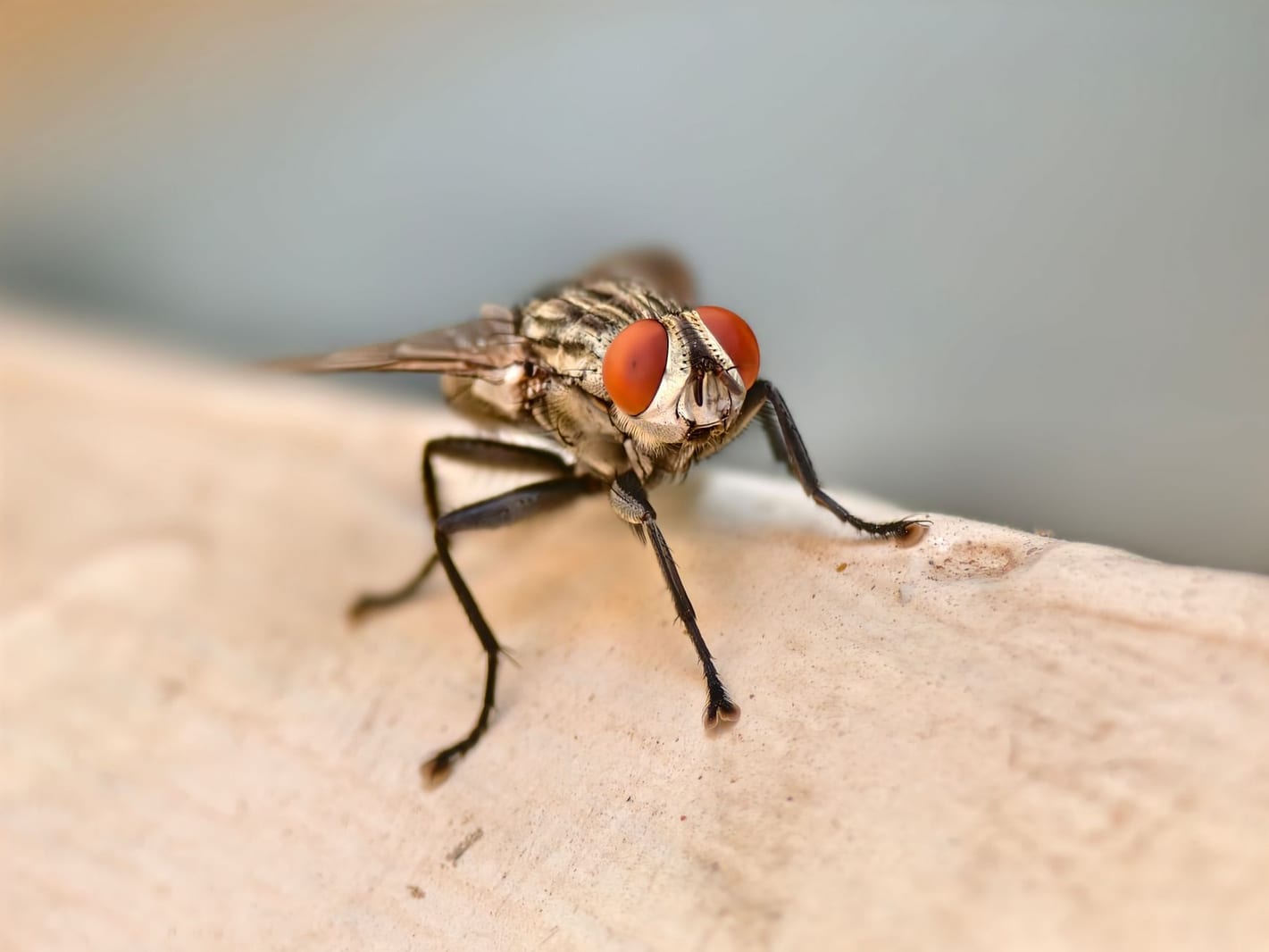
Flies are one of the four common pests this neighbourhood registers, and Williamsburg's fly pressure is driven substantially by the density of bars and restaurants along Bedford Avenue and the waterfront. Commercial trash storage, grease traps, and outdoor dining areas concentrated in that corridor create breeding and feeding conditions that spread to nearby residential buildings, particularly on blocks close to the busiest food-service strips.
Indoor fly problems in residential units usually trace to a different source — a slow kitchen or bathroom drain harbouring drain flies, overripe produce, or a garbage area that isn't sealed properly. We check both the building's proximity to commercial fly pressure and the unit's own conditions before recommending treatment.
Because the corridor's fly pressure is largely an outdoor and commercial-adjacent problem, a residential fly job here often pairs indoor drain and sanitation treatment with an assessment of nearby exterior conditions.
Getting rid of flies in a NYC kitchen or building — why sanitation beats spraying
House flies are mechanical disease vectors, not just a nuisance. Penn State Extension explains that flies regurgitate and excrete wherever they come to rest and thereby mechanically transmit disease organisms, carrying pathogens from garbage, drains and waste onto food and surfaces — the real public-health reason to keep fly numbers down in a dense NYC setting with shared bins and food premises nearby. (Penn State Extension — House Flies)
The genuine fix is sanitation, not spraying. Penn State Extension lists the control principles — sanitation, exclusion, non-chemical measures and chemical methods — in order of lasting effectiveness, sanitation first and chemicals last, and notes that flies cannot breed in large numbers if their food sources are limited. Eliminating the breeding material is what actually ends an infestation. (Penn State Extension — House Flies)
Spraying adult flies without removing the breeding source fails. Penn State Extension notes that because insecticides are broken down by sunlight the residual effect is greatly decreased, and interior space sprays give only temporary knockdown. Until the source — garbage, decaying organic matter, the greasy organic film inside drains — is removed, new adults keep emerging and the problem returns. (Penn State Extension — House Flies)
Finding the source is the first move, especially with drain (filter) flies. Penn State Extension calls finding and eliminating breeding places an important first step in control and warns against letting garbage, decaying organic matter and similar material accumulate. For small flies breeding in the organic slime inside floor drains, scrubbing out that film removes the larval habitat that fogging a room never reaches. (Penn State Extension — House Flies)
Signs you have a fly control problem
- Persistent flies in a kitchen or bathroom despite normal cleaning
- Small flies hovering near a drain — a sign of drain fly breeding in organic buildup
- Increased fly activity in units near Bedford Avenue's restaurant and bar corridor or the waterfront
- Flies clustering near garbage storage areas or loading docks
Why Williamsburg sees this
Williamsburg's Bedford Avenue and waterfront nightlife and food-service density is a documented driver of rodent and fly pressure into nearby residential blocks.
Fly problems this close to a commercial food corridor often need both an indoor treatment and an honest look at nearby exterior conditions, rather than treating the unit in isolation.