Quick answer
To get rid of ants in a NYC apartment, identify the species first (most are pavement ants), then use ant baits along the trail instead of spraying — workers carry the bait back and kill the colony. Clean up food and water sources, seal the entry cracks, and call a professional if large ants or sawdust piles suggest carpenter ants.
What kind of ant is in your apartment?
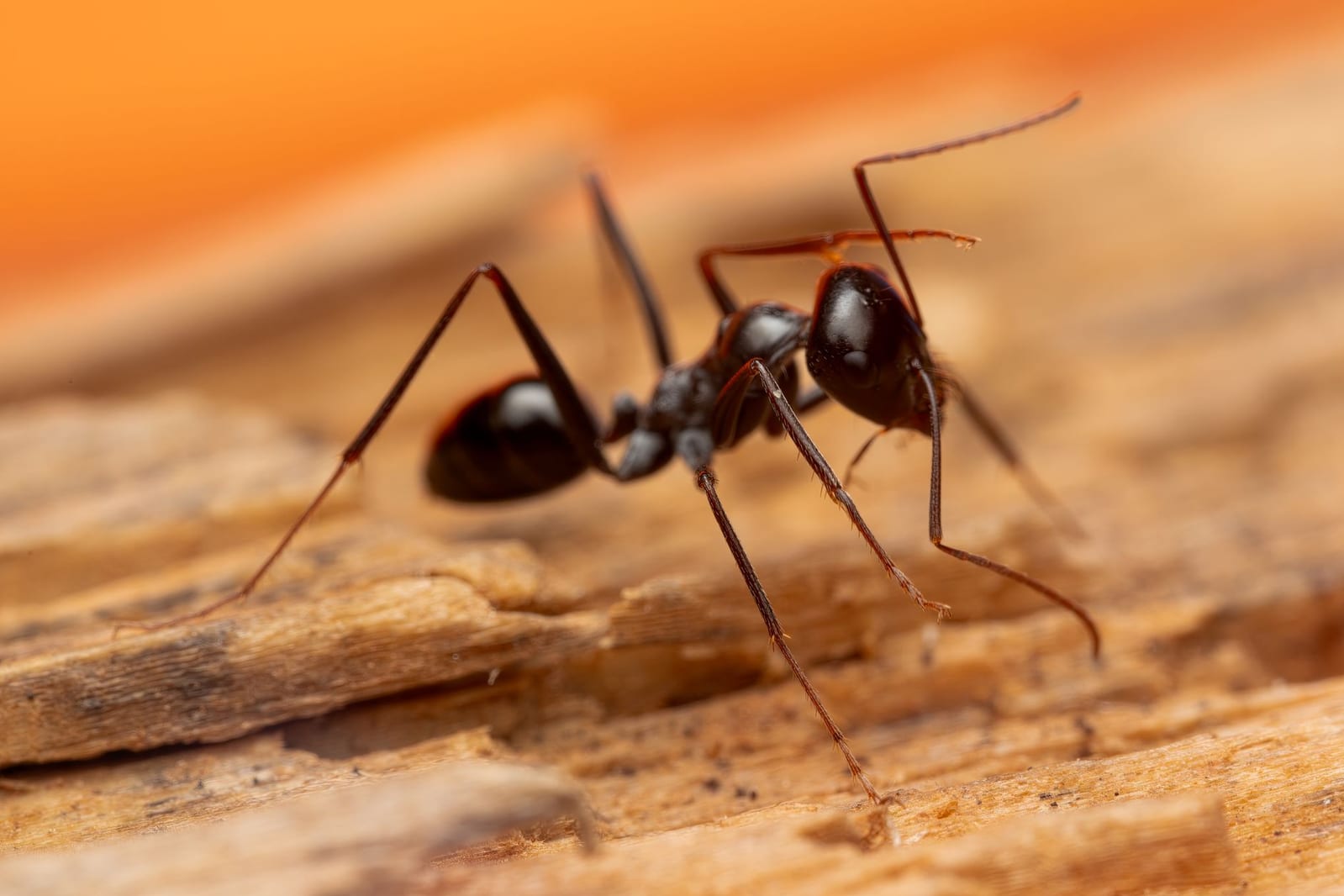
In NYC apartments, the small dark ants trailing across your kitchen are almost always pavement ants. They’re about 1/8 inch long and dark brown, and — true to the name — they nest under sidewalks, building slabs and foundations, slipping inside through cracks to forage. Cornell’s integrated pest management program identifies them as among the most common structure-invading ants in New York.
The identification that actually matters is pavement ant vs. carpenter ant:
| Pavement ant | Carpenter ant | |
|---|---|---|
| Size | ~1/8 inch | 1/4–3/4 inch |
| Color | Dark brown | Black or dark, sometimes reddish |
| Telltale sign | Steady trails to food | Sawdust-like frass; winged swarmers indoors |
| What it means | Nuisance foraging | Possible nest in damp or water-damaged wood |
Pavement ants are a nuisance you can usually beat with bait. Carpenter ants nest in moist or water-damaged wood — window frames, areas around leaks, wall voids — and are a structural issue. If your ants are large or you’re seeing fine sawdust piles, read our carpenter ant guide and get an inspection.
Why shouldn’t you just spray the trail?
Because the trail isn’t the colony. The ants you see are foragers — a small fraction of a colony that lives under the slab, in a wall void, or outside the building entirely. Spray the trail and you kill a few dozen workers; the queen keeps producing, and a new trail appears a few feet away within days.
Cornell’s IPM guidance points the other way: very effective ant baits are widely available, while sprays carry pesticide-exposure risk for people and pets and are best left to professional application when they’re needed at all. The logic of baiting is simple — use the colony’s own behavior against it. Foragers carry slow-acting bait back to the nest, feed it to the colony and queen, and the problem ends at the source.
How do you bait ants properly?
- Leave the trail alone. Don’t wipe it with cleaner yet — the pheromone trail is what leads workers to your bait.
- Place bait beside the trail, not on it: gel dots or bait stations along the baseboard, at the entry crack, and near where you’ve seen the most activity.
- Expect a surge. More ants at the bait in the first days is the recruitment you want.
- Keep competing food away. Bait competes with crumbs; a clean kitchen makes the bait the best meal in the building.
- Give it one to two weeks, refreshing bait as it’s consumed. Only after trails stop should you clean away the old trail routes and seal the cracks.
If one bait gets ignored, switch formulations — colonies shift between sugar and protein appetites through the season.
What stops ants coming back?
Sanitation and sealing. Cornell’s IPM team puts kitchen sanitation first for a reason — ants are in your apartment because something feeds them.
- Wipe counters and sweep floors so crumbs and spill residue don’t accumulate.
- Store honey, sugar, syrups and pet food in sealed containers (wipe the outside of the honey jar — drips recruit scouts).
- Rinse bottles and cans before they sit in recycling.
- Fix drips and dry out sinks overnight; water draws ants in dry weather.
- Caulk the entry cracks you saw trails using: baseboard gaps, window frames, pipe and cable penetrations, thresholds.
In an apartment building you can’t control the slab the colony nests under, but you can make your unit the hardest one on the floor to forage in.
When should you call a professional?
Call in professional ant control when:
- The ants are large or you’ve found frass — possible carpenter ants nesting in the structure, which needs the nest found and treated, not just baited.
- Trails persist past two or three weeks of disciplined baiting — the colony or its food source is somewhere you can’t reach, often a wall void or a neighboring unit.
- Multiple units are affected — building-level treatment beats unit-by-unit whack-a-mole.
- It’s a recurring spring event — annual invasions respond well to preventive treatment timed before the season; see our NYC pest control calendar for when ant pressure peaks, and our exterminator cost guide for what treatment typically runs.
A professional can identify the species precisely, locate the nest, and use baits and targeted treatments that end the colony — not just this week’s trail.